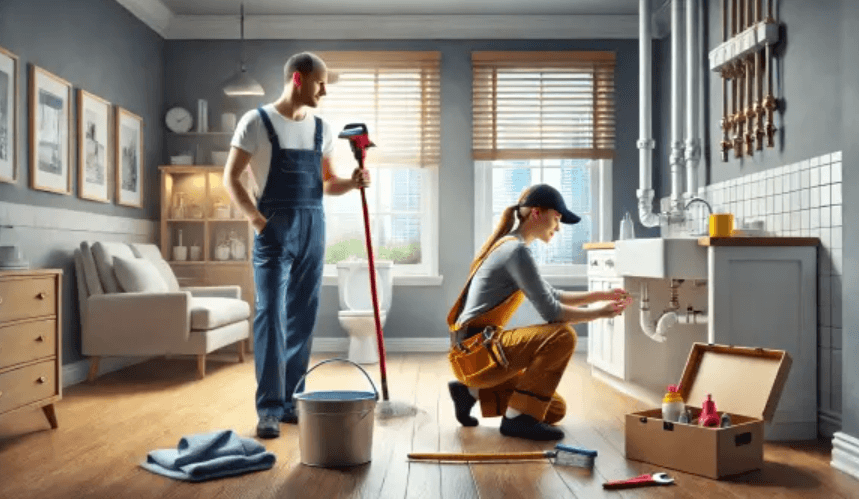
Anyone who’s hosted a short-term rental for more than a year knows the listing price was never the hard part. The real challenge shows up later, in the form of Airbnb maintenance costs that don’t appear in any onboarding guide.
A property that books every weekend gets used like a small hotel but most hosts maintain it like a regular home. That gap is where Airbnb maintenance costs quietly pile up.
Why Airbnb Maintenance Costs Add Up Faster Than Expected
A typical homeowner runs their dishwasher a few times a week and showers maybe twice a day per person. A short-term rental with back-to-back bookings can see that same usage multiplied by three or four guests, every few days, with zero downtime in between.
Plumbing systems built for normal household use start showing strain under that kind of turnover. Drains clog faster and water heaters work harder. Garbage disposals deal with food waste from guests who don’t know which leftovers are safe to rinse down the sink.
Airbnb maintenance costs tend to surface first in the bathroom and kitchen, the two spaces guests use the most and clean the least carefully.
The Hidden Line Item: Plumbing Wear and Tear
Most new hosts budget for cleaning fees, linens and the occasional broken dish. Few budgets specifically for plumbing wear and tear which is one of the biggest hidden Airbnb maintenance costs out there.
Slow drains get ignored for months because nobody’s around long enough to notice the pattern. A guest mentions the sink is slow in a review, the host assumes it’s minor and by the time a real clog forms, it’s an emergency call instead of a quick fix.
Industry data on short-term rentals consistently shows that proactive maintenance costs roughly a third of what reactive repairs cost once something actually fails. That math matters even more for hosts running multiple properties, where Airbnb maintenance costs scale with every additional listing.
Building a Maintenance Reserve That Actually Works
Experienced hosts now treat Airbnb maintenance costs the way hotels treat capital expenditure: as a fixed percentage of revenue, set aside before profit gets calculated.
A common approach is reserving 1 to 3 percent of gross rental income specifically for plumbing and mechanical upkeep. That covers routine drain cleaning, water heater servicing and the occasional after-hours call when a guest reports an issue mid-stay.
Setting up a relationship with a plumbing service before there’s an emergency also helps control Airbnb maintenance costs. Hosts who wait until a pipe bursts during a booked weekend end up paying premium emergency rates and losing income from a canceled stay. Hosts who already have someone on call avoid both problems.
What to Check Before Your Next Booking Season
A few habits keep Airbnb maintenance costs predictable instead of surprising. Run water in every fixture before each new guest arrives, not just between cleanings. Check under sinks for slow leaks that won’t show up until they’ve caused real damage. Test water heater recovery time if you’ve had back-to-back bookings with multiple guests showering daily.
None of this requires extensive plumbing knowledge. It just requires treating the property like the small business it actually is. Hosts who’d rather get ahead of a slow drain or aging water heater than deal with a mid-booking emergency can click here to set up an inspection before the next busy season starts.
A short consultation with a plumbing service that understands short-term rental wear patterns, like DrainGuys, can help identify which fixtures are closest to failing before a guest finds out the hard way.
See also: Expert Doors and Windows Repair to Improve Home Security
Final Thoughts
Airbnb maintenance costs aren’t going away as the short-term rental market matures but they don’t have to stay unpredictable either. Hosts who treat plumbing upkeep as a budget line item, not an afterthought, tend to avoid the worst of it.
The hosts with the best reviews aren’t necessarily the ones with the nicest furniture. They’re the ones whose guests never had to deal with a slow drain or a cold shower in the first place.