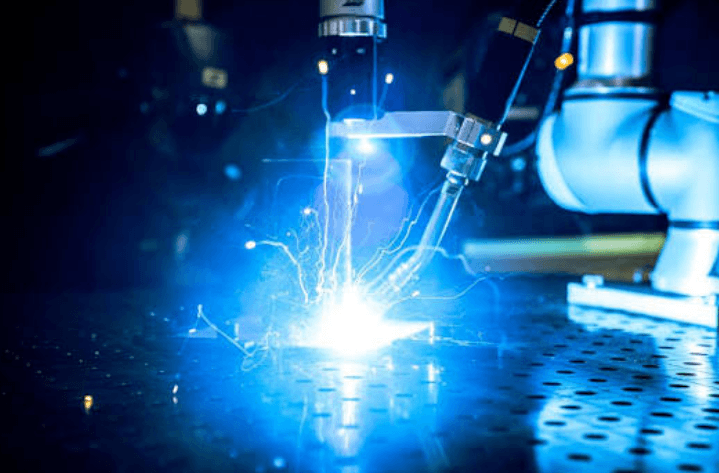
A plasma cutting table is built to handle heat, molten metal, slag, dust, and demanding production schedules. When that table uses a water-based system, the liquid beneath the cutting surface does more than collect debris. It becomes part of the operating environment surrounding the machine.
That is where plasma table coolant & conditioner comes in.
When we look at cutting table maintenance, the easiest mistake is treating the water table like a container that only needs water. Water helps absorb heat, but untreated water does not address corrosion, biological growth, odor, contamination, or other conditions that develop inside an industrial cutting table.
Plasma table coolant and conditioner is formulated to manage those conditions. Understanding what it does, step by step, makes it easier to understand why maintaining the fluid is an important part of maintaining the cutting operation itself.
Step 1: Understand What Happens During Plasma Cutting
Plasma cutting uses an electrically conductive plasma arc to cut through metal. The cutting process generates intense localized heat and produces molten metal, sparks, fumes, slag, and other process debris.
Many plasma cutting systems use a water table beneath the workpiece. Depending on the system design, that water helps manage some of the heat and debris created during cutting.
The environment inside that table becomes demanding very quickly.
The liquid can be exposed to:
- Hot metal and slag
- Metal fines
- Oils carried in from material
- Dirt and shop contamination
- Repeated heating and cooling
- Ferrous and non-ferrous metals
- Extended periods sitting inside the reservoir
That means the condition of the water becomes an operating variable rather than simply a housekeeping issue.
Step 2: Understand Why Plain Water Is Not the Complete Answer
Water is useful because of its ability to absorb heat. However, water also creates a major industrial maintenance challenge: metal and water can create conditions that promote corrosion.
A plasma cutting table contains substantial amounts of exposed metal.
The workpieces are metal. The table components are metal. Slats are metal. Various internal surfaces and equipment can remain in contact with moisture for extended periods.
Simply adding more water does not address corrosion protection.
Water can also collect contaminants during production. Oils, dirt, fines, and process residue enter the table over time. Without chemistry designed for the application, maintaining a stable cutting-table environment becomes more difficult.
This is the gap that plasma table coolant and conditioner is designed to fill.
Step 3: What Is Plasma Table Coolant & Conditioner?
Plasma table coolant & conditioner is a specialty fluid used in water-based plasma cutting tables to help control heat-related conditions, corrosion, contamination, and fluid cleanliness.
The terms coolant and conditioner describe two related jobs.
The Coolant Function
The coolant portion helps the water-based system manage the thermal environment surrounding hot metal and cutting operations.
It does not replace the plasma cutting system’s engineered cooling requirements. Instead, it supports the water-table environment in which hot material, slag, and equipment repeatedly interact with liquid.
The Conditioner Function
The conditioning chemistry addresses what happens to that liquid while it remains inside an industrial cutting table.
Depending on the formulation, cutting table conditioners are designed to address issues such as:
- Corrosion
- Rust formation
- Bacterial activity
- Odor
- Tramp oil
- Fluid stability
- Residue or unwanted buildup
This combination is why the product is commonly described as a coolant and conditioner, rather than simply a coolant.
PICO Chemical, for example, categorizes its plasma and waterjet fluids around cooling, corrosion inhibition, and cutting-table conditioning functions.
Step 4: The Fluid Helps Control Corrosion
Corrosion protection is one of the most important reasons a cutting operation uses properly formulated table fluid.
A water table creates prolonged interaction between moisture and metal. Without appropriate corrosion control, rust can affect the table, workpieces, components, and exposed surfaces.
A properly selected plasma table coolant typically incorporates corrosion-inhibiting chemistry.
The objective is straightforward: reduce the conditions that allow water-based operation to accelerate unnecessary corrosion.
This matters operationally because corrosion is not only cosmetic. When metal equipment deteriorates, maintenance requirements increase. Parts become harder to keep clean, equipment condition becomes less predictable, and components eventually require repair or replacement.
For an operation focused on uptime, controlling corrosion is preventative maintenance in chemical form.
Step 5: The Conditioner Helps Keep the Water Table Manageable
Plasma cutting tables do not stay clean simply because they contain water.
Material enters the table throughout production.
That contamination can include metal particles, slag, dirt, lubricants, oils, and other substances carried into the system by raw material or the surrounding manufacturing environment.
Over time, the reservoir becomes a collection point.
A cutting table conditioner helps maintain the fluid so that the table remains easier to operate and maintain between scheduled cleanouts.
This is an important distinction: conditioner does not eliminate maintenance.
No cutting table fluid makes slag, metal fines, and accumulated debris disappear. Physical contamination still has to be removed according to the equipment manufacturer’s maintenance requirements.
The chemistry helps make the fluid itself more manageable between those maintenance intervals.
Step 6: Plasma Table Conditioner Can Help Control Bacteria and Odor
Water, contaminants, oils, and warm industrial environments can create conditions where microorganisms become another maintenance problem.
That is one reason cutting table operators sometimes encounter unpleasant odors from poorly maintained water tables.
Certain plasma table fluids are formulated for biological stability and odor control.
For example, PICO describes PICO QUENCH GUARD G Cutting Table Coolant & Conditioner as a coolant, conditioner, and rust inhibitor designed to address corrosion while also helping prevent odor, bacteria, and tramp-oil buildup in daily-use systems.
Controlling those conditions contributes to a cleaner and more manageable production environment.
It also demonstrates why simply replacing evaporated water does not constitute complete table-fluid maintenance.
Step 7: The Right Chemistry Has to Match the Materials Being Cut
Not every cutting table processes the same material.
One operation may primarily cut carbon steel. Another may regularly process stainless steel, aluminum, galvanized material, or several alloys on the same equipment.
That matters when selecting plasma table coolant.
Fluid compatibility must be evaluated against the materials, equipment, process, water conditions, and downstream production requirements involved.
PICO’s cutting table product range illustrates this distinction. Its current portfolio includes multiple plasma and waterjet fluids rather than treating every cutting environment as identical.
That is an important purchasing lesson.
Do not select plasma table coolant simply because the label says “plasma coolant.”
Confirm that the chemistry is appropriate for:
- The cutting equipment
- The table design
- The materials processed
- Water conditions
- Adjacent processes
- Maintenance requirements
- Downstream welding, finishing, or surface-treatment requirements
Product technical documentation should provide the applicable usage information. When compatibility is unclear, the chemical manufacturer and equipment manufacturer should be involved before the fluid is introduced.
Step 8: Coolant & Conditioner Is Different From Cutting Table Cleaner
This distinction causes confusion.
A plasma table coolant and conditioner maintains the operating fluid.
A cutting table cleaner is used to remove accumulated contamination during maintenance.
Those jobs are related, but they are not interchangeable.
Think about the difference this way:
| Product | Primary Job |
| Plasma table coolant | Supports the water-based thermal environment |
| Plasma table conditioner | Helps control corrosion, contamination, biological conditions, and fluid stability |
| Cutting table cleaner | Removes accumulated oils, dirt, residue, and contamination during cleaning |
| Slat coating | Helps prevent slag, dross, and spatter from adhering to table surfaces |
For heavily contaminated systems, changing the coolant without properly addressing the existing contamination defeats the purpose of starting with fresh chemistry.
Dedicated products such as plasma, oxy-fuel, and waterjet table cleaners are designed specifically for that maintenance function.
PICO also separates table coatings and cleaners from its operating fluids because each chemistry addresses a different part of cutting-table maintenance.
See also: Beyond the Multi-Vendor Maze: How Regional Companies Build Efficient IT Solutions in Ohio
Step 9: The Fluid Is Part of a Larger Cutting Table Maintenance Strategy
Plasma table coolant should never be viewed as a substitute for routine equipment maintenance.
It works as part of the maintenance program.
That program includes monitoring fluid condition, removing accumulated debris, inspecting the table, cleaning the reservoir when required, maintaining slats, and following the cutting system manufacturer’s recommendations.
Operations also have to consider slag and dross accumulation.
These materials can build up on cutting table slats and surrounding surfaces. Protective products such as cutting table slat coatings address that particular problem separately from the water-table chemistry.
The most effective approach therefore treats the cutting table as a complete system.
Coolant manages one set of conditions. Conditioner manages another. Cleaners address accumulated contamination. Protective coatings address adhesion and buildup.
Each product has a defined job.
Step 10: Proper Fluid Management Supports Equipment Life and Uptime
The business reason for using plasma table coolant and conditioner ultimately comes back to equipment reliability.
Cutting tables are production assets.
Every unnecessary maintenance event interrupts production. Every corrosion problem consumes labor. Every contaminated reservoir requires attention. Every component that deteriorates prematurely becomes another operating cost.
Maintaining the correct cutting table chemistry helps control several of the conditions that contribute to those problems.
That supports:
- More predictable table maintenance
- Better corrosion control
- Cleaner system conditions
- Reduced odor problems
- Better management of contamination
- Protection of cutting table components
- Longer-term equipment care
- More consistent production conditions
The return is not created by coolant alone. It comes from maintaining the entire cutting system correctly and preventing avoidable problems before they become downtime.
Step 11: Choosing the Right Plasma Table Coolant & Conditioner
Selecting a cutting table fluid should begin with the operating conditions rather than price alone.
A production team should understand exactly what the fluid needs to accomplish.
Questions to evaluate include:
- What type of plasma cutting table is being used?
- Which metals are routinely processed?
- What materials may enter the table from upstream processes?
- Is corrosion already occurring?
- Are odor or biological problems present?
- What contamination routinely enters the reservoir?
- What downstream processes will the cut parts undergo?
- What does the equipment manufacturer specify for fluid use?
- What does the coolant manufacturer’s technical documentation require?
Those answers create a much stronger purchasing specification than simply asking for “plasma table coolant.”
PICO’s broader cutting table fluid portfolio includes operating fluids, cleaners, coatings, and related products for plasma and other cutting environments.
Why Plasma Table Coolant & Conditioner Is Important to an Operation
The value of plasma table coolant becomes much clearer when the entire process is considered.
A plasma table continually combines water, metal, extreme heat, slag, oils, contaminants, and production debris.
Leaving that environment unmanaged creates unnecessary maintenance variables.
Coolant and conditioning chemistry gives the operation another level of control.
It helps address corrosion rather than accepting rust as inevitable. It helps control biological conditions rather than waiting for odor to become a problem. It helps maintain the reservoir rather than treating table-fluid condition as an afterthought.
For production managers and maintenance teams, that makes plasma table coolant less of a consumable and more of a preventative maintenance component.
Frequently Asked Questions About Plasma Table Coolant & Conditioner
Can you use plain water in a plasma cutting table?
Water provides heat absorption, but plain water does not provide the corrosion inhibition and conditioning functions available from purpose-formulated cutting table fluids. The appropriate fluid requirements depend on the equipment and operating conditions. Always follow the plasma system manufacturer’s requirements and the chemical manufacturer’s technical documentation.
What does plasma table conditioner do?
Plasma table conditioner helps control the operating condition of water inside the table. Formulations can address corrosion, bacteria, odor, tramp oil, and other contamination-related issues. Its purpose is to make the water-based cutting environment easier to maintain throughout production.
Is plasma table coolant the same as plasma torch coolant?
No. These are different applications. Plasma table coolant conditions the water-table environment beneath the cutting process. Plasma torch coolant is designed for cooling circuits associated with torch systems. PICO, for example, lists PICO PTC 730 within its plasma and waterjet fluid portfolio specifically for plasma torch cooling applications.
Does plasma table coolant prevent rust?
Corrosion-inhibiting cutting table fluids are formulated to reduce rust and corrosion under the operating conditions for which they are designed. Compatibility, concentration, water quality, contamination, and maintenance condition all affect fluid performance. Product documentation should be followed rather than assuming every coolant provides identical corrosion protection.
Does coolant eliminate the need to clean a plasma cutting table?
No. Metal fines, slag, oils, dirt, and other physical contamination still accumulate. Coolant and conditioner help maintain the operating fluid, while scheduled cleaning removes contamination that chemistry cannot eliminate.
How often should plasma table coolant be changed?
There is no universal replacement interval that applies to every plasma table. Fluid life depends on operating conditions, contamination, water quality, production volume, chemistry, and maintenance practices. Follow the equipment manufacturer’s recommendations and the coolant supplier’s technical documentation.
The Practical Takeaway
Plasma table coolant and conditioner has a straightforward job: help keep the water-based cutting environment under control while the plasma system does its work.
The coolant component supports heat management. The conditioner helps manage corrosion, contamination, biological conditions, and fluid stability. Cleaners and protective coatings address additional maintenance problems outside the coolant’s role.
Together, these products form part of a broader strategy for keeping cutting equipment productive.
For operations that depend on plasma cutting every day, treating water-table chemistry as preventative maintenance helps protect the table, simplify maintenance, and support more consistent production.