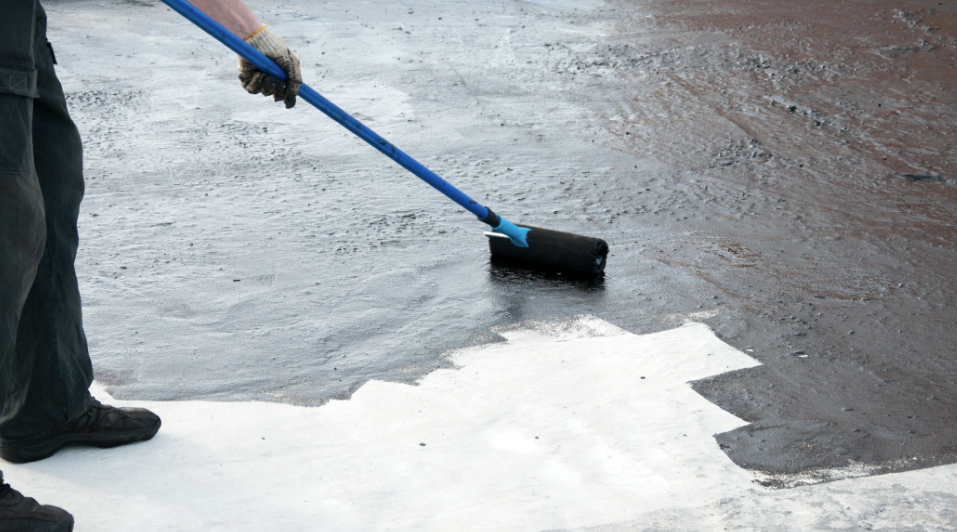
Waterproofing is often discussed from the perspective of the finished building. People notice a dry basement, a protected roof, or a terrace that remains usable after heavy rain. Much less attention is given to what happens before a waterproofing product reaches the construction site. Behind every professional coating system is a combination of material selection, formulation, production control, testing, packaging, and technical planning.
A modern coating is not simply a liquid material designed to cover a wall or floor. Different waterproofing technologies are developed for different conditions, including cementitious systems, polymer-modified coatings, polyurethane membranes, acrylic products, bituminous coatings, and other specialized formulations. Their performance requirements can vary considerably depending on the substrate and environment.
This makes the role of a waterproof coating manufacturer much broader than producing a container of material. A capable manufacturer has to connect laboratory development with manufacturing consistency and practical site requirements. The finished product needs to be stable enough for production, practical enough for application, and appropriate for the conditions in which it will eventually be used.
The Process Begins Before Manufacturing
The first stage of a waterproofing product is normally the selection of raw materials and the definition of the performance target. Manufacturers need to determine what the finished system is expected to accomplish before deciding how it should be formulated.
A roof coating, for example, may need to deal with sunlight, rain, temperature changes, and minor surface movement. A basement system may face groundwater pressure and damp substrates. A coating for a water-retaining structure can have entirely different requirements from a decorative exterior product.
These differences influence the choice of binders, polymers, fillers, additives, pigments, and other ingredients. The formulation process is therefore closely connected to the intended application rather than being based on waterproofing as a single universal category.
See also: The Impact of Technology on Modern Education
Raw Materials Influence the Finished Product
Consistency begins with the materials used during production. Variations in raw materials can affect viscosity, adhesion, flexibility, curing, colour, workability, and final resistance.
Manufacturers can reduce these variations through controlled purchasing and incoming material checks. Storage conditions can also matter. Certain ingredients may require protection from moisture, excessive heat, contamination, or other environmental conditions before they enter production.
For large projects, this consistency becomes especially important. Contractors may use the same product across hundreds or thousands of square metres. If different batches behave noticeably differently, application can become more difficult and the finished appearance may vary.
Formulation Is a Balance of Properties
A waterproof coating cannot always maximize every desirable characteristic at the same time. Increasing hardness, flexibility, drying speed, adhesion, chemical resistance, or elasticity may involve technical compromises.
For this reason, formulation teams often need to balance multiple requirements. A coating intended to accommodate minor movement may require flexibility, while another application may prioritize abrasion resistance. A product designed for a damp substrate may need different characteristics from one intended for a completely dry surface.
The final formulation is therefore the result of technical decisions rather than a simple mixture of ingredients. Laboratory development helps manufacturers understand how these materials interact and how changes affect the final product.
Testing Turns a Formula Into a Usable Product
Before a coating is supplied for real projects, manufacturers can evaluate its physical and performance characteristics through laboratory testing. The specific tests depend on the formulation and intended use.
Testing may examine properties such as adhesion, tensile strength, elongation, water resistance, crack bridging, abrasion resistance, curing behaviour, or resistance to environmental exposure. Different standards may apply depending on the product category and market.
Testing is valuable because laboratory conditions allow manufacturers to compare formulations systematically. If a change in raw material improves one characteristic but reduces another, development teams can identify the difference before the product reaches a construction site.
Production Scale Creates Its Own Challenges
A formula that works in a laboratory still needs to be manufactured consistently at commercial scale. Production equipment is larger, batch sizes are different, and mixing behaviour can change when the quantity of material increases.
Manufacturers therefore need controlled production procedures. Ingredient quantities, mixing sequences, temperatures, production times, and other variables may need to be monitored carefully.
This is particularly important for multi-component systems. If a product requires components to be mixed together before application, the ratio and consistency of those components need to remain within the manufacturer’s specifications. Packaging also needs to clearly distinguish the different parts.
Packaging Protects More Than the Product
Once production is complete, packaging becomes part of the supply process. Waterproofing materials may travel considerable distances before reaching a construction site, and unsuitable storage can affect their condition.
Containers need to protect the product from contamination and environmental exposure while also allowing contractors to handle and apply the material efficiently. Product identification, batch information, storage instructions, and application guidance can help reduce mistakes during use.
For professional projects, traceability can also be useful. Batch numbers allow manufacturers and project teams to connect a product with its production information if questions arise later.
Site Conditions Complete the Performance Equation
Even a well-formulated coating cannot compensate for unsuitable site conditions. The substrate has to be prepared according to the product requirements, and application conditions need to remain within the recommended range.
Dust, oil, loose material, standing water, cracks, poor adhesion, or unsuitable moisture conditions can all interfere with performance. The correct preparation method depends on the substrate and coating system.
Application thickness also matters. Applying too little material may prevent the system from reaching its intended performance, while excessive thickness can create its own problems for certain formulations. Manufacturers therefore provide technical instructions that should be followed rather than treating the product like ordinary decorative paint.
Different Technologies Serve Different Construction Needs
The waterproofing market includes several technology groups because buildings face different moisture challenges. Cementitious coatings can be used for particular concrete and masonry applications. Polymer-modified systems can provide flexibility and adhesion characteristics. Polyurethane and polyurea technologies can offer flexible membrane solutions, while bituminous products remain important in various structural waterproofing applications.
No single technology should automatically be considered appropriate for every project. The correct choice depends on the substrate, exposure, expected movement, water pressure, environmental conditions, application method, and desired finish.
This variety also explains why manufacturers often maintain broader product portfolios. Contractors may need complementary primers, repair materials, sealants, membranes, or surface preparation products alongside the main waterproofing coating.
Technical Support Connects Products With Projects
A waterproofing product can be technically strong and still fail if it is incorrectly specified or applied. This is where technical support becomes an important part of the manufacturing relationship.
Manufacturers can provide information about substrate preparation, recommended application methods, coverage, mixing, curing, compatibility, and environmental limitations. On larger projects, technical teams may also help consultants and contractors understand which system is appropriate for a particular construction detail.
This type of support can reduce the gap between laboratory performance and real-world application. It also helps customers understand that waterproofing is a system rather than simply a product.
Research Continues After a Product Reaches the Market
Construction environments change over time, and manufacturers continue to develop formulations in response to new requirements. Projects may demand lower emissions, easier application, faster curing, improved flexibility, stronger adhesion, or greater resistance to particular environmental conditions.
Research can also focus on improving manufacturing efficiency and reducing unnecessary material use. Better formulation control may improve consistency while changes in raw materials or production methods can influence sustainability and cost.
This ongoing development means that waterproofing technology is not static. Manufacturers need to evaluate both existing products and emerging materials to keep their systems relevant to changing construction requirements.
How Buyers Can Evaluate a Manufacturer
For contractors and project owners, comparing manufacturers involves more than looking at the price printed on a product list. Technical documentation, product specifications, testing information, manufacturing controls, application guidance, and after-sales support can all provide useful information.
It is also worth asking whether the manufacturer understands the specific application. A supplier focused mainly on general decorative coatings may not provide the same technical depth as a company specializing in construction waterproofing systems.
The goal should be to find a product and manufacturer combination that matches the actual project. A coating designed for a particular environment, supported by clear application information, can be easier to specify and manage than a generic product selected only because it carries a waterproofing label.
Final Thoughts
Waterproofing performance begins long before a coating reaches a wall, roof, basement, or foundation. Raw material selection, formulation, laboratory testing, production controls, packaging, transportation, and site application all contribute to the final result.
A waterproof coating manufacturer sits at the center of this process, translating material science into products that can be used under real construction conditions. The strongest manufacturing approach is therefore not simply about producing more coatings, but about developing systems that are consistent, technically understood, and suited to their intended environments.
For buyers, looking beyond the product label can reveal important differences between suppliers. Understanding how a coating is developed and supported can make the selection process more practical and can help ensure that the chosen waterproofing system is appropriate for the surface, environment, and demands of the project.
Frequently Asked Questions
What does a waterproof coating manufacturer actually do?
A manufacturer develops, formulates, tests, produces, packages, and supports waterproofing products. Some manufacturers also provide technical assistance for product selection and application.
Why are there different types of waterproof coatings?
Different surfaces and environments require different characteristics. Roofs, basements, concrete structures, terraces, foundations, and industrial areas can experience different levels of water exposure, movement, temperature change, and physical wear.
Does the quality of raw material affect waterproof coating performance?
Yes. Raw material consistency can influence important characteristics such as adhesion, flexibility, curing behaviour, workability, and durability.
Why is laboratory testing important?
Testing allows manufacturers to evaluate the physical and performance characteristics of a formulation under controlled conditions before it is supplied for wider use.
Can one waterproof coating be used everywhere?
Not necessarily. Product suitability depends on the substrate, moisture conditions, environmental exposure, movement, application method, and other project requirements.
Why is technical support important?
Technical guidance can help contractors understand preparation, mixing, application thickness, curing, compatibility, and other conditions that influence the final waterproofing system.
What should buyers ask before selecting a manufacturer?
Useful questions include which substrates the product supports, what testing or technical documentation is available, how batches are controlled, what application conditions are required, and whether technical assistance is available for demanding projects.