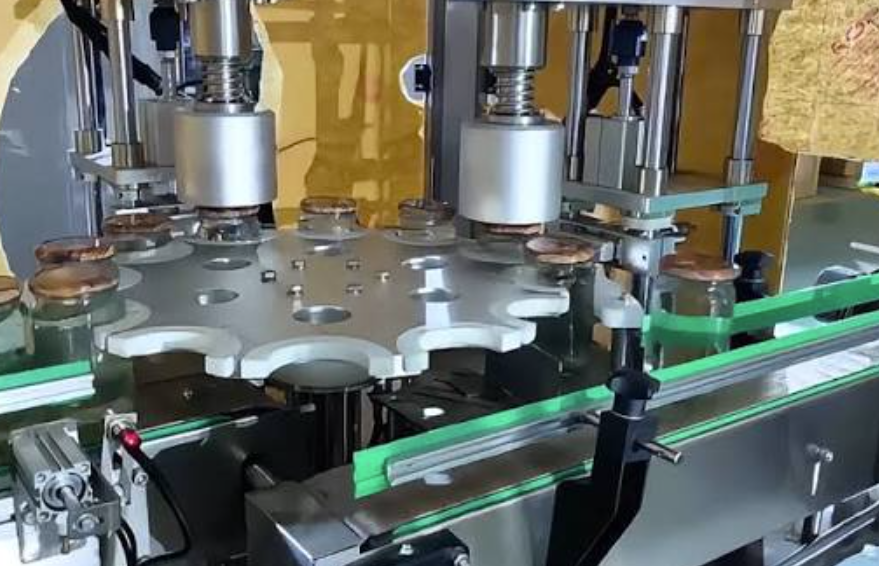
Bottle packaging has changed considerably as manufacturers introduce new products, container shapes, closure designs, and production requirements. A bottle may look like a simple packaging item, but its dimensions, neck size, material, weight, and stability can all affect how it moves through a production line. For manufacturers, choosing equipment that works well with these details is an important part of packaging planning.
A bottle filling and capping machine is designed to coordinate two essential stages of bottle packaging. It places the required product into the container and then applies the appropriate closure. When the equipment is correctly matched with the bottle and product, these stages can become part of a controlled and repeatable workflow.
Modern packaging operations also need to consider more than machine output. Bottle compatibility, filling behavior, cap design, changeover requirements, inspection procedures, and maintenance can all influence how effectively the equipment performs over time. Understanding these factors allows manufacturers to build packaging processes around their actual products instead of treating every bottle in the same way.
Bottle Design Influences Machine Performance
Not every bottle behaves the same way during packaging. Differences in height, diameter, shape, neck finish, and material can affect how the container is positioned and transported.
A narrow bottle may require different guides from a wider container. Lightweight plastic bottles may also require careful handling to prevent movement during filling or capping.
Before installing equipment, manufacturers should identify the dimensions and characteristics of every bottle format expected to run through the system.
This information helps determine whether the filling heads, bottle guides, conveyors, and capping components are appropriate for the application.
See also: How Vertical Injection Molding Machines Fit Into Flexible Tooling Strategies
Understanding the Bottle Neck
The neck of a bottle is particularly important because both filling and capping interact with this area.
The filling nozzle needs to reach the appropriate position without interfering with the container. After filling, the closure must align correctly with the bottle’s neck finish.
Small differences in neck dimensions can therefore influence equipment compatibility.
When manufacturers introduce a new bottle supplier or packaging format, they should verify the relevant dimensions rather than assuming that the new container will behave identically to the previous one.
Matching the Filling System to the Product
The product inside the bottle can be just as important as the container itself.
Different liquids have different flow characteristics. Some are thin and move quickly, while others are thicker and require a different filling approach. Certain products may also create foam during filling.
The filling system should be selected according to these characteristics.
Using suitable filling technology can help manufacturers establish a more predictable relationship between the product and the container. Machine settings can then be adjusted according to the specific production requirements.
Maintaining a Consistent Fill
Consistency is an important consideration when bottles are filled repeatedly throughout a production run.
Variations can occur if product conditions change, machine settings are unsuitable, or containers are not positioned correctly.
Manufacturers can establish operating parameters for each product and monitor the filling process during production. Initial bottles can be checked after setup to confirm that the process is performing as expected.
Regular monitoring can also help identify changes before they affect a larger quantity of packaged products.
Closure Compatibility Matters
A bottle and its cap need to work together. Different closure types can have different dimensions, shapes, materials, and application requirements.
A capping system must therefore be matched to the closure being used.
The cap should reach the correct position before the machine applies the required closing action. If the closure is not properly aligned, the finished package may not meet the manufacturer’s specifications.
This is why cap selection should be considered alongside bottle design and machine configuration.
Managing Lightweight Bottles
Lightweight packaging can create specific handling considerations. A lighter bottle may move more easily when exposed to mechanical forces during conveying, filling, or capping.
Bottle guides and positioning systems need to provide appropriate support without creating unnecessary pressure on the container.
Manufacturers using lightweight packaging should test the complete process rather than evaluating only the filling stage.
The behavior of the bottle throughout the entire packaging cycle provides a more useful picture of equipment compatibility.
Handling Different Bottle Formats
Businesses often use multiple bottle sizes for the same product family. For example, a product may be available in small, medium, and large containers.
Running these formats on shared equipment requires appropriate changeover procedures.
Guides, filling positions, nozzles, capping components, and other machine settings may need adjustment depending on the bottle.
A documented changeover process can help operators identify which components and settings are required for each format.
Reducing Errors During Changeovers
A changeover is an opportunity for mistakes if the process is not clearly organized.
Operators may need to replace components, adjust guides, confirm the correct cap supply, and modify filling settings.
Using product-specific setup sheets can make these tasks easier to repeat. Photographs, measurements, component identification, and approved settings can provide useful references where appropriate.
The first bottles produced after the changeover should also be checked before the new production run continues at full capacity.
Keeping Bottles Properly Positioned
Accurate positioning is important for both filling and capping.
If a bottle is slightly off-center, the filling nozzle may not enter the intended position. Later in the process, the capping mechanism may also have difficulty placing the closure correctly.
Guides and positioning components help maintain the relationship between the bottle and the machine.
Regular inspection of these components is useful because wear or incorrect adjustment can gradually affect positioning.
Connecting Filling and Capping With Labeling
The bottle packaging process often continues beyond filling and capping. Labels, date codes, batch information, seals, and secondary packaging may follow.
The condition of the bottle after capping can influence how smoothly these later operations work.
For example, an incorrectly positioned closure or unstable bottle can create problems at a downstream labeling or inspection station.
Considering the complete packaging sequence can therefore help manufacturers identify compatibility issues before they become production bottlenecks.
Planning for Product Changes
Manufacturers sometimes introduce new formulations that use the same bottle but behave differently during filling.
A change in viscosity, temperature requirements, or foaming behavior can require adjustments even when the container remains unchanged.
Production teams should therefore treat product changes as potential process changes.
Testing the new product under controlled conditions allows operators to establish suitable filling and capping parameters before regular production begins.
Cleaning Between Production Runs
Packaging equipment needs appropriate cleaning and preparation when production requirements change.
The specific procedure depends on the product, machine design, and production environment. Accessible machine components can make routine cleaning and inspection easier to organize.
Operators should follow established procedures rather than relying on assumptions about what needs to be cleaned.
Cleaning records can also provide useful information when multiple products are processed using the same equipment.
Monitoring Machine Performance
A machine can gradually behave differently as components wear or production conditions change.
Production teams can monitor issues such as repeated bottle misalignment, inconsistent filling, cap positioning problems, unexpected stops, or increased adjustment requirements.
These observations can help maintenance teams investigate problems before they develop into larger interruptions.
Keeping records of recurring issues also makes it easier to distinguish between isolated incidents and developing equipment problems.
Choosing Equipment for Long-Term Use
Selecting a packaging machine should involve more than comparing advertised production speeds.
Manufacturers should consider bottle dimensions, product characteristics, closure specifications, changeover requirements, maintenance access, spare parts, operator training, and possible future formats.
A machine that matches the current bottle but cannot reasonably accommodate planned packaging changes may become restrictive later.
Careful planning can help manufacturers choose equipment that remains useful as their packaging requirements develop.
Building a Practical Bottle Packaging Workflow
An effective bottle packaging system brings several considerations together. The bottle needs to move correctly, the product needs to be filled consistently, and the closure needs to be applied in a controlled manner.
When these stages are designed around one another, operators have a clearer workflow and production teams have more opportunities to identify problems early.
The result is not simply a faster packaging process. It is a process that is easier to understand, monitor, adjust, and maintain.
Final Thoughts
A bottle filling and capping machine can provide a structured approach to two important stages of bottle packaging. Its effectiveness depends heavily on the relationship between the machine, bottle design, product characteristics, closure type, and production workflow.
Manufacturers that carefully evaluate bottle dimensions, neck specifications, filling behavior, capping requirements, changeover procedures, and maintenance needs can create a more predictable packaging operation.
As bottle designs and product ranges continue to evolve, adaptable packaging planning becomes increasingly valuable. The right machine is ultimately one that fits the real requirements of the product while providing a practical foundation for consistent day-to-day production.
FAQs
What bottles can be used with filling and capping equipment?
The compatible bottle types depend on the machine design. Bottle dimensions, material, shape, neck finish, and stability should all be evaluated before production.
Why is the bottle neck important?
The neck determines how the filling nozzle interacts with the container and how the closure is positioned during capping.
Can one machine handle multiple bottle sizes?
Some machines can accommodate several compatible formats through adjustments or interchangeable components. The supported range depends on the specific equipment.
What affects filling consistency?
Product viscosity, temperature, foaming behavior, machine settings, nozzle condition, and bottle positioning can all influence filling performance.
Why should the first bottles after a changeover be inspected?
Checking the initial bottles helps confirm that filling, positioning, and capping settings are appropriate before the full production run continues.
How can manufacturers prepare for future bottle formats?
They can consider planned bottle sizes, closure types, adjustment requirements, machine compatibility, and automation possibilities when selecting equipment.