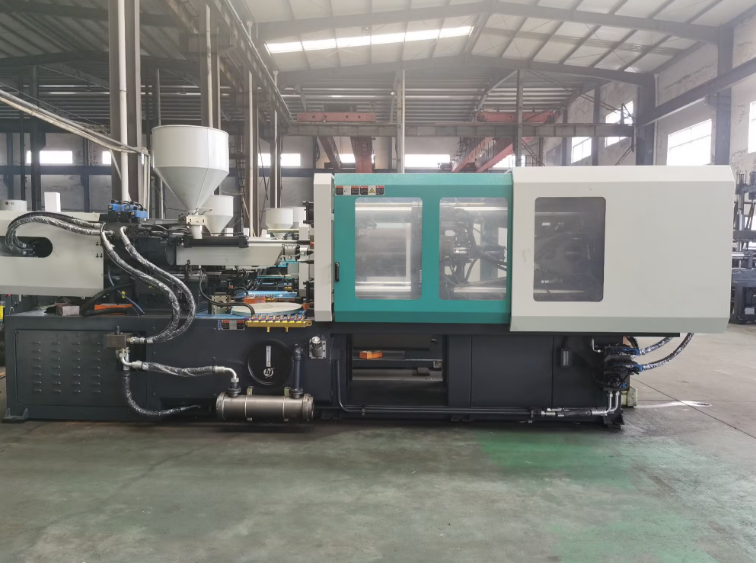
Modern manufacturing often requires companies to produce different components on the same production floor. Product designs change, customer requirements evolve, and manufacturers may need to switch between different molds without disrupting the entire workflow. Because of this, the relationship between molding equipment and tooling has become an important part of production planning.
A vertical injection molding machine can provide a useful setup for manufacturers working with molds that require accessible loading, insert placement, or specialized production arrangements. Its vertical configuration can make the working area easier to approach during certain tooling and production activities.
However, machine flexibility does not depend on configuration alone. Mold design, changeover procedures, tooling storage, setup documentation, and maintenance all contribute to how effectively equipment can support different production requirements. Looking at these factors together can help manufacturers create a more adaptable molding operation.
Why Tooling Strategy Matters
A mold is one of the most important components of an injection molding process. It determines the shape of the product and plays a major role in how material flows, cools, and is released from the cavity.
Manufacturers that produce multiple products may have several molds available for different components. Without proper tooling management, switching between these molds can become time-consuming and difficult to control.
A structured tooling strategy helps production teams know which mold belongs to which product, what machine requirements it has, and what setup conditions need to be followed.
See also: The Impact of Technology on Modern Education
Making Mold Changes More Organized
Changing a mold involves more than physically removing one tool and installing another. The process may include cleaning the machine area, preparing lifting equipment, checking connections, installing the new mold, connecting necessary systems, and verifying machine settings.
A well-organized procedure can reduce the possibility of missing an important setup step.
Documentation is especially useful when several operators or production shifts work with the same equipment. Clear records can provide information about mold identification, recommended settings, previous maintenance, and any special installation requirements.
This creates greater consistency when the same tooling is used repeatedly.
The Value of Accessible Working Areas
The vertical configuration of a molding system can be helpful when production involves direct access to the mold. Operators may need to position inserts, inspect cavity areas, or remove finished components as part of the production cycle.
This accessibility can also influence how tooling-related tasks are organized around the machine.
For example, a production cell can be arranged so that commonly used inserts, tools, and inspection equipment are located within an efficient working zone. The objective is to create a logical sequence rather than forcing operators to repeatedly move between unrelated areas.
Managing Different Mold Requirements
Not every mold has identical requirements. One tool may be designed for a simple plastic component, while another may require inserts, additional cooling connections, or different operating parameters.
Manufacturers should therefore maintain a clear record of the requirements associated with each mold.
This information can include mold dimensions, compatible machine specifications, material requirements, temperature ranges, cooling requirements, and setup instructions. Having these details available before installation can make production planning more predictable.
Designing Tooling for Repeatable Use
A mold that performs well during its first production run still needs to remain reliable over many cycles. Proper tooling design and maintenance can influence how long it remains suitable for production.
Wear surfaces, cavity details, ejector mechanisms, cooling channels, and other components should be monitored according to the tool’s operating requirements.
When maintenance is performed at appropriate intervals, manufacturers can address wear before it creates larger production problems. Keeping a tooling history also helps maintenance teams understand how a mold has performed over time.
Supporting Small Production Runs
Not every manufacturer operates continuous high-volume production. Some businesses produce smaller batches or regularly switch between product variants.
For these environments, efficient tooling management can be particularly valuable. The ability to organize molds, prepare them before installation, and document setup requirements can help reduce unnecessary downtime during product changes.
A vertical injection molding machine can be considered as part of this type of production strategy when its configuration matches the product and tooling requirements.
The goal is not simply to change molds faster. It is to create a predictable process for moving from one production requirement to another.
Preparing Tooling Before Installation
Preparation outside the machine can save valuable production time. Before a mold reaches the molding cell, technicians can check its condition, confirm required accessories, clean relevant surfaces, and prepare connections.
This approach allows some problems to be discovered before the machine is stopped for a tooling change.
Tool preparation can also include checking identification labels and reviewing the production documentation. A small amount of preparation can prevent confusion once the mold is ready for installation.
Keeping Tooling Storage Under Control
Tooling management continues even when a mold is not being used.
Molds should be stored in conditions appropriate to their materials and design. Manufacturers may also need systems for protecting mold surfaces, preventing corrosion where relevant, and keeping accessories together with the correct tool.
A clear storage system makes it easier to locate the required mold when production begins. It also reduces the chance of installing the wrong tool or losing important components between production runs.
Using Setup Data More Effectively
Production teams often collect useful information during molding but fail to organize it for future use.
A tooling record can include previous production settings, maintenance work, common setup issues, inspection observations, and component-specific instructions. When the mold returns to production, technicians can use this information as a starting reference.
This can reduce dependence on individual operator memory and create a more repeatable setup process.
Digital manufacturing systems can make this information easier to store and retrieve when a facility has the appropriate infrastructure.
Balancing Tooling Investment and Production Needs
Custom molds can represent a significant investment, particularly when they involve complex cavities, specialized components, or tight dimensional requirements.
Manufacturers should therefore consider expected production volume, product lifespan, material selection, cycle requirements, and future design changes before committing to tooling.
A tool designed only for a short production run may require a different investment strategy from a mold expected to operate for many years.
Understanding the expected role of each mold helps manufacturers make more informed tooling decisions.
Planning for Engineering Changes
Product designs can change after production has already started. A cavity may need modification, an insert may be redesigned, or a dimensional requirement may be updated.
Tooling records can make these changes easier to manage because they provide a history of the mold and its previous configurations.
Manufacturers should document engineering changes carefully so that operators and maintenance teams know which version of the tooling is approved for production.
This becomes increasingly important when multiple molds or product variants are being managed simultaneously.
Creating a More Adaptable Production Floor
A flexible production floor is not created by machines alone. It depends on how equipment, tooling, materials, people, and information are organized.
When molds are properly identified, stored, maintained, and documented, production teams can respond more effectively to changing schedules. Machines can then be used according to their actual capabilities instead of becoming bottlenecks because of poorly managed tooling.
This broader approach allows manufacturers to treat tooling as a long-term production asset rather than simply something attached to a machine.
Final Thoughts
A vertical injection molding machine can become part of an effective tooling strategy when its configuration matches the requirements of the products being manufactured. Accessible mold areas, insert handling, organized work cells, and flexible production arrangements can all influence how manufacturers approach tooling.
The equipment is only one part of the equation. Proper mold preparation, storage, maintenance, setup documentation, and engineering change control are equally important for maintaining a dependable production process.
By treating machine and tooling management as connected activities, manufacturers can build a more organized operation that is better prepared for product variations, changing schedules, and long-term production requirements.
FAQs
What is a tooling strategy in injection molding?
A tooling strategy is the planned approach used to select, maintain, store, document, and manage molds throughout their production life.
Why is mold documentation important?
Documentation can provide operators and technicians with information about machine compatibility, setup requirements, maintenance history, and previous production conditions.
Can vertical molding equipment support different molds?
It can, provided the molds are compatible with the machine’s specifications, dimensions, clamping requirements, and intended production process.
How can manufacturers make mold changes more efficient?
Preparing tooling in advance, maintaining clear setup instructions, organizing accessories, and following standardized changeover procedures can make mold changes more predictable.
How does tooling maintenance affect production?
Regular tooling maintenance can help identify wear and other issues before they interfere with product quality or production continuity.