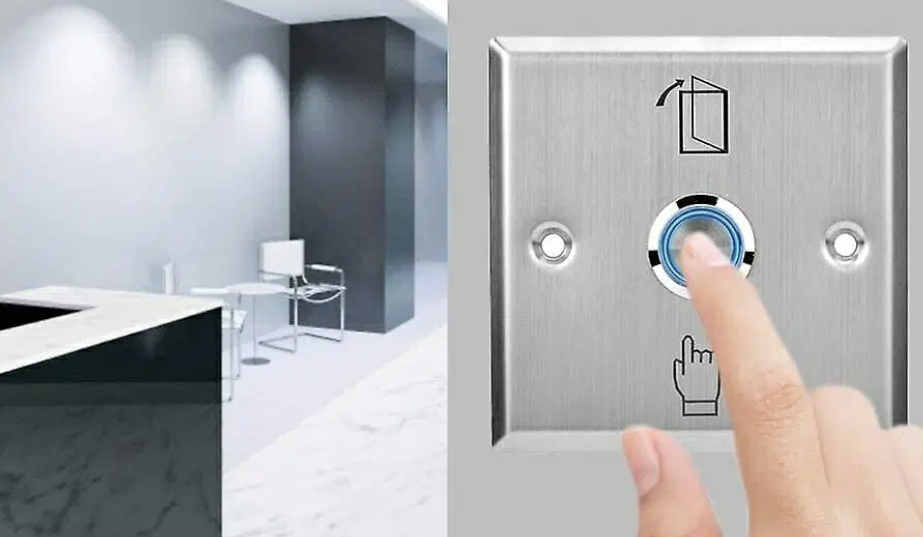
A building entrance is one of the first places where people interact directly with a facility. Visitors need to understand how the door works, where to stand, and how to enter without unnecessary hesitation. In busy environments, even a small point of confusion can affect the movement of people through the entrance.
A PedSense push button offers a straightforward way for users to request automatic door operation. Instead of depending entirely on a person being detected by a sensor, the activation point gives the user a direct interaction with the entrance system. This simple approach can be valuable in buildings where predictable access is an important part of the daily experience.
Good entrance design is not only about automation. It is also about making technology understandable to the people who use it. A clearly positioned activation device can help bridge that gap between automated equipment and everyday human interaction.
Making Automatic Doors Easier to Understand
Automation can sometimes feel invisible to users. A person approaches a door, waits for a sensor to respond, and may wonder whether the system has detected them correctly.
A physical activation point makes the process more obvious. When a button is clearly visible, users immediately have an indication of how they can request access.
This can be particularly helpful in unfamiliar buildings where visitors may not know whether the entrance is automatic, sensor-operated, or manually controlled.
See also: How a hollow anchor bar Supports Flexible Ground Reinforcement in Modern Construction
Giving Visitors a Sense of Independence
Building accessibility is closely connected with independence.
People should be able to interact with entrances without unnecessarily depending on another person to operate the door. A dedicated activation device can give users a direct method of initiating the opening process.
A PedSense push button can therefore form part of an entrance design that allows individuals to interact with the door according to their own movement and timing.
Helping Visitors Who Approach Slowly
Not everyone approaches an entrance at the same speed.
Someone using a mobility aid, carrying equipment, moving carefully, or simply walking at a slower pace may interact differently with an automatic sensor than another visitor.
A push-button activation method provides a deliberate alternative. The user can activate the entrance when they are ready to proceed rather than relying solely on automatic detection.
Supporting Predictable Door Operation
Predictability matters in public spaces.
When users understand what action will activate the door, they can plan their movement accordingly. This can reduce hesitation and make the entrance feel more straightforward.
A PedSense push button can contribute to this predictability by establishing a clear connection between user input and automatic door operation.
Useful for Buildings With Frequent First-Time Visitors
Some facilities have a constantly changing population of visitors.
Hospitals, government offices, conference centers, universities, and public service buildings may welcome people who have never used the entrance before.
An intuitive activation system can help these visitors navigate the building without requiring staff assistance for basic door operation.
Simple interactions can be especially valuable in large facilities where employees cannot provide individual guidance to every person entering the building.
Supporting More Deliberate Access
Automatic sensors are useful when hands-free operation is required, but there are situations where deliberate activation can make sense.
A user may want the door to open at a specific moment rather than simply when they approach the detection area. A push button allows the person to initiate the action intentionally.
This can make the entrance experience feel more controlled while still providing automated door movement.
Improving Entrance Interaction for Busy Facilities
High-traffic buildings need entrances that are easy to understand without lengthy instructions.
When people approach an entrance in groups, uncertainty about how the door operates can create small delays. A recognizable activation point can help users understand what to do quickly.
This can support smoother movement through the entrance, particularly when combined with appropriate door configuration and building layout.
Supporting Different Types of Users
A modern building may be used by employees, customers, patients, students, delivery workers, contractors, and visitors.
Each group interacts with the entrance differently. Regular employees may already know how the door works, while first-time visitors may need a more obvious indication.
A clearly designed activation point provides a common interaction method that can be understood across different user groups.
Considering the Location of the Button
The position of a push button can influence how useful it is.
Users should be able to recognize and reach the activation point without creating awkward movement around the entrance. The surrounding space, pedestrian direction, visibility, and accessibility requirements should all be considered during installation.
A technically reliable device can still provide a poor user experience if its placement is inconvenient.
Matching the Entrance to the Building’s Purpose
Different buildings require different approaches to access.
A hospital entrance may prioritize accessibility and frequent movement. An office building may focus on employee convenience. A public facility may need an intuitive system for visitors who have little knowledge of the building.
The activation method should therefore be considered in relation to the purpose and daily traffic patterns of the facility.
Supporting Door System Integration
A push button is only one part of an automatic entrance.
The complete system may include the door operator, sensors, safety components, control equipment, and other activation methods. These elements need to work together properly for the entrance to function as intended.
When planning an installation, facility managers should consider how the activation device fits into the existing door system rather than treating it as an isolated component.
Maintaining a Consistent Experience Across Entrances
Large facilities may have several automatic doors.
If every entrance operates differently, visitors may need to learn a new interaction method each time they approach another access point. A consistent activation strategy can make the building easier to navigate.
Using familiar controls across appropriate entrances can also simplify employee training and facility management procedures.
Keeping Accessibility in Everyday Design
Accessibility is most effective when it is incorporated naturally into everyday building design.
Rather than treating accessible entrances as separate or secondary features, facilities can consider how all users interact with their access points. Activation devices can be one part of this broader approach.
A PedSense push button can support this objective by providing a direct method of door activation within an automatic entrance environment.
Making Maintenance Easier to Plan
Entrance components require regular attention to maintain dependable operation.
Facility teams can include activation devices in their routine inspection schedules. Checks may include physical condition, responsiveness, mounting stability, and interaction with the wider automatic door system.
A planned maintenance approach can help identify issues before they become noticeable to a large number of building users.
Designing for Long-Term Usability
An entrance may be used thousands of times over its service life.
For this reason, designers and facility managers need to consider more than the initial installation. The activation method should remain understandable, accessible, and practical as the building continues to operate.
Simple user interactions often have an advantage because they do not require visitors to understand complicated technology before they can enter.
Supporting Future Building Improvements
Facilities are increasingly adopting smart building technologies and integrated control systems.
As these systems develop, entrance activation may become connected with broader building management solutions. A clear physical activation method can continue to serve as a practical user interface within a more advanced system.
This allows modern technology to remain accessible to people who simply want to enter a building without dealing with unnecessary complexity.
Final Thoughts
The best automated entrance systems are not necessarily those with the most complicated technology. They are systems that make everyday access clear, predictable, and convenient for the people using them.
A PedSense push button provides a simple interaction point that can help users initiate automatic door operation according to their own needs. It can support independence, accessibility, predictable movement, and a more intuitive experience in public and commercial environments.
When combined with appropriate installation, reliable door equipment, regular maintenance, and thoughtful entrance design, a PedSense push button can become a small but meaningful part of a building’s overall access strategy.
FAQs
What is a PedSense push button used for?
It is used to provide manual activation for an automatic door, allowing a user to request that the door open.
Why can a physical activation button be useful with automatic doors?
It gives users a clear and deliberate way to interact with the entrance instead of relying entirely on automatic detection.
Can push-button activation support accessibility?
A properly positioned activation device can form part of an accessible entrance design by providing a direct method of requesting door operation.
Where can these activation devices be useful?
They can be suitable for many environments, including offices, healthcare facilities, educational buildings, public facilities, and commercial properties.
Does button placement matter?
Yes. Visibility, reachability, pedestrian movement, and the surrounding entrance layout can all affect the usability of the activation point.
Is maintenance required?
Regular inspection of the activation device and its connection with the automatic door system can help maintain dependable operation.