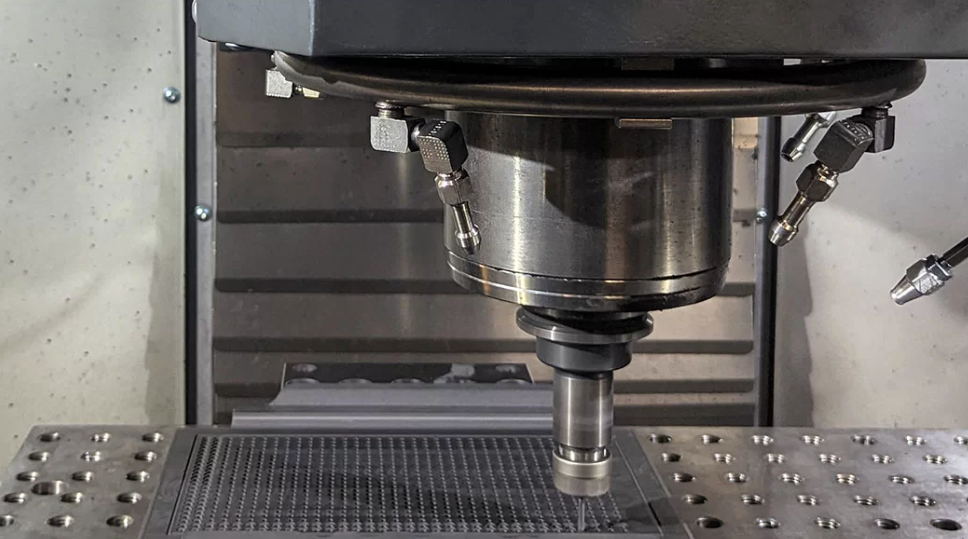
Graphite can look relatively simple when viewed as a raw block, plate, rod, or blank, but turning that material into a precise industrial component requires a different approach from ordinary metal machining. The material has useful thermal, electrical, and chemical characteristics, yet its brittleness, abrasive machining behavior, and tendency to generate fine particles create challenges that need to be considered throughout production.
This is why graphite machining companies often need specialized knowledge rather than simply applying standard metalworking methods to a carbon based material. CNC milling, turning, drilling, grinding, sawing, and other processes can all be used, but the choice of tooling, cutting conditions, workholding, inspection, and dust management can influence the quality of the finished part. Industry suppliers commonly offer several of these machining methods for graphite and carbon components.
The complexity becomes even greater when a component has tight dimensional requirements or an unusual geometry. A manufacturer may need to work from an engineering drawing, a CAD model, or even an existing sample. The objective is not simply to remove material but to produce a component with predictable dimensions and surface characteristics while preserving the properties required for its final application.
Graphite Requires a Different Machining Mindset
Machining graphite is not exactly the same as machining steel, aluminum, or other common engineering metals. Graphite’s structure means that aggressive cutting conditions can produce unwanted chipping or damage, particularly around thin sections, sharp corners, small holes, and delicate features.
The machining strategy therefore needs to take the material’s behavior into account. Tool selection, spindle speed, feed rate, cutting depth, and workholding can all influence the finished component.
Experienced machinists learn to balance material removal with dimensional control. Removing material quickly is not necessarily useful if the process creates damaged edges or makes final finishing more difficult.
See also: The Impact of Technology on Modern Education
Tool Selection Can Influence the Finished Part
Graphite can be abrasive, which means tooling can experience significant wear depending on the grade and machining operation. Tool geometry and material therefore deserve careful consideration.
A suitable tool allows the machining process to remove graphite efficiently while maintaining the required geometry. Tool condition also matters because a worn tool can affect dimensional accuracy and surface quality.
For repeated production, monitoring tool life can become part of process control. Replacing or maintaining tooling according to established production requirements can help prevent gradual changes in component dimensions.
Dust Management Is Part of the Process
One of the most obvious differences between graphite and many metal machining operations is the fine dust generated during cutting. This makes appropriate extraction and workplace controls an important part of the machining environment.
Dust can also affect machinery and surrounding surfaces if it is not controlled properly. Accumulation around sensitive equipment may create maintenance problems and can complicate inspection or assembly activities.
A well-organized machining facility therefore needs more than CNC equipment. Suitable extraction, cleaning procedures, machine protection, and controlled handling of graphite particles all contribute to a reliable production environment.
Precision Depends on the Graphite Grade
Graphite is available in different grades with varying grain structures, densities, purities, and physical properties. These differences can influence how the material behaves during machining.
A fine-grain graphite may behave differently from a coarser material when producing small features or detailed geometries. High-purity materials may also have specific requirements related to their final application.
For this reason, a machining company needs to know which graphite is being processed before developing the manufacturing procedure. The same machining approach should not automatically be applied to every graphite grade.
Tight Tolerances Require More Than a Good CNC Machine
Modern CNC equipment can provide excellent repeatability, but machine capability is only one part of precision machining. Workholding, tool condition, material stability, programming, measurement equipment, and environmental conditions can all influence the final dimensions.
Specialized graphite machining providers often use CNC milling and turning equipment alongside grinding and inspection capabilities for applications where close tolerances are required.
The inspection stage is particularly important when a component must fit accurately into another assembly. Measuring critical dimensions during and after production can help identify deviations before the part reaches final assembly.
Complex Shapes Need Careful Programming
Graphite components can include holes, channels, grooves, pockets, curved surfaces, threads, and other detailed features. Creating these features accurately requires careful programming and suitable machining sequences.
CAD data can help manufacturers translate an engineering design into machine instructions. Some specialist facilities accept common CAD formats and use them to prepare machining programs for complex graphite components.
Programming also needs to consider the order in which features are produced. Machining a delicate section too early, for example, may make it more vulnerable during later operations. A carefully planned sequence can help protect important features throughout production.
Thin Sections Require Extra Attention
Thin graphite walls and narrow features can be particularly sensitive during machining. Excessive cutting force or unsuitable workholding can create movement or edge damage.
The solution is not simply to machine more slowly. The entire process may need to be planned around how the component will be supported during different stages.
Machinists may divide the operation into multiple steps, leaving additional material until later finishing operations. This can provide greater control over the final geometry.
Surface Finish Depends on the Application
Not every graphite component requires the same surface finish. A simple structural component may have different requirements from a sealing surface, furnace component, electrical part, or semiconductor-related component.
Milling, grinding, sanding, and other finishing processes can produce different surface characteristics. Specialist graphite machining providers may offer multiple finishing options depending on the product specification.
The important point is that surface finish should be defined according to function rather than appearance alone. A smoother surface is not automatically better if the application requires a different texture or dimensional condition.
Custom Work Can Start From a Drawing or Sample
Many graphite components are not standard off-the-shelf products. Industrial customers may require a replacement part for existing equipment or a completely new component for a specialized system.
A machining company may be able to work from engineering drawings, CAD files, or physical samples depending on its capabilities. Some manufacturers specifically offer prototype, short-run, and larger production work.
This flexibility is valuable when a business needs only a small number of specialized parts. Instead of redesigning equipment around a standard component, the graphite part can be manufactured according to the actual requirements of the system.
Prototypes Need a Different Production Strategy
A prototype allows engineers to evaluate a component before committing to larger production quantities. Graphite machining can support this development process because CNC equipment can produce complex shapes without requiring a dedicated high-volume manufacturing line.
The first component can reveal problems with dimensions, assembly, clearance, surface requirements, or material selection.
Once the design has been verified, the machining process can then be refined for repeat production. Some graphite machining companies specifically support both one-off components and larger production runs.
Inspection Should Match the Component
Inspection requirements depend on what the graphite part is designed to do. A simple block may need basic dimensional checks, while a complex component with multiple critical features may require much more detailed measurement.
Important dimensions should be identified before production begins. This allows the machining and inspection teams to focus attention on the features that actually affect assembly or performance.
Clear inspection criteria also make repeat orders easier because future components can be compared against established specifications.
Material Treatment Can Extend Component Performance
Machining is sometimes only one stage of graphite component production. Depending on the application, additional treatments or coatings may be considered.
Certain manufacturers offer processes such as purification, impregnation, or oxidation protection for suitable graphite products.
These treatments are application-specific and should not be assumed to be necessary for every component. The operating environment should determine whether additional processing provides a meaningful benefit.
Choosing a Machining Partner by Capability
A company searching for a graphite machining supplier should look beyond the availability of a CNC machine. The important question is whether the supplier understands graphite as a material.
Useful considerations include experience with the required graphite grade, available machining processes, tolerance capability, inspection methods, dust-control procedures, production volume, and ability to work from engineering drawings.
The supplier’s experience with similar applications can also be valuable. A company that regularly machines furnace components may have different expertise from one primarily producing EDM electrodes or semiconductor parts.
Production Consistency Matters for Replacement Parts
Industrial customers may need the same graphite component repeatedly. A replacement part that differs slightly from the original can create installation or performance problems.
Maintaining production records, drawings, material information, and inspection data can help manufacturers reproduce components more consistently.
This becomes particularly useful for equipment that remains in service for many years. Even if a customer orders only a few replacement parts at a time, having the original manufacturing information available can simplify future production.
The Real Value Is in the Complete Process
Precision graphite machining is not defined by one machine or one cutting tool. It is the combination of material knowledge, programming, machining, dust management, inspection, finishing, and quality control.
A manufacturer that understands the entire process can identify potential problems earlier. It can also help customers make better decisions about graphite grade, geometry, tolerances, and production methods.
This complete approach is particularly important when the component will operate in a demanding thermal, electrical, chemical, or industrial environment.
Final Thoughts
Graphite machining requires a balance between precision and material-specific knowledge. The ability to produce a complex shape is useful, but reliable manufacturing also depends on controlling the conditions under which that shape is created.
Experienced graphite machining companies can support this process through suitable tooling, CNC equipment, dust management, inspection, finishing, and application knowledge. Precision machining suppliers commonly work with graphite through operations such as milling, turning, drilling, grinding, and custom fabrication, with capabilities varying between manufacturers.
For buyers, the best starting point is a clear understanding of the component’s purpose. Once the required material grade, dimensions, tolerances, surface characteristics, and operating conditions are known, it becomes much easier to identify a machining partner capable of producing the required part consistently.
FAQs
Why is graphite different from ordinary machining materials?
Graphite has a brittle structure and can generate fine particles during machining. Its abrasive characteristics and material grades also influence tooling, cutting conditions, and finishing requirements.
What machining processes can be used for graphite?
Depending on the component, graphite can be processed through CNC milling, turning, drilling, sawing, grinding, and other specialized operations.
Why is dust extraction important during graphite machining?
Machining can generate fine graphite particles. Proper extraction and cleaning procedures help maintain a controlled working environment and reduce contamination around machinery.
Can graphite be machined into complex shapes?
Yes. CNC machining can produce components with features such as holes, channels, pockets, threads, contours, and other detailed geometries when suitable equipment and programming are used.
Can machining companies produce prototype graphite parts?
Many specialist suppliers support prototype and low-volume work in addition to larger production runs.
What information should be provided when requesting a graphite machined part?
A technical drawing or CAD file, graphite grade, dimensions, tolerances, surface requirements, quantity, and operating environment can help a machining company prepare an accurate quotation and production plan.
Does graphite grade affect machining?
Yes. Different graphite grades can have different grain structures, densities, purity levels, and machining behavior. Selecting suitable cutting and finishing methods therefore requires knowledge of the specific material.