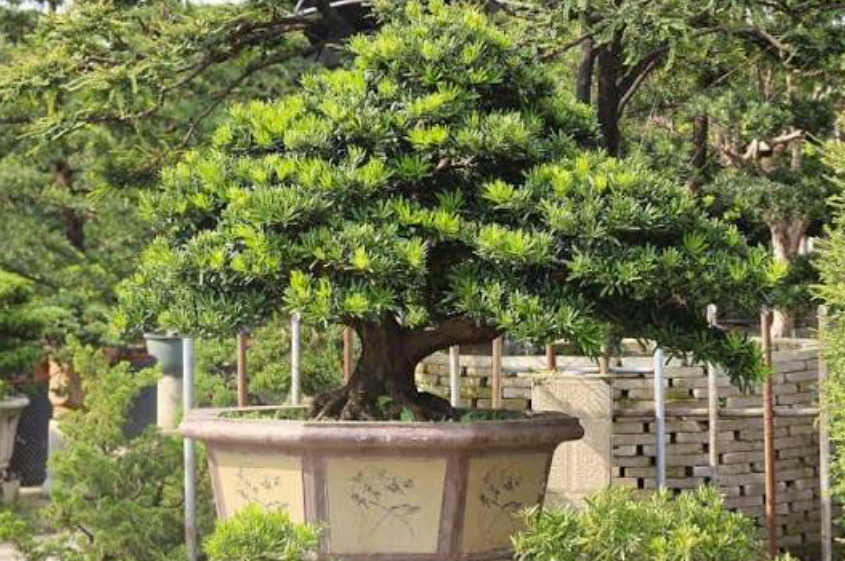
Modern interiors often use plants to soften hard surfaces, add natural texture, and create a stronger connection with the outdoors. Yet not every plant provides the visual character of a mature tree. Some remain primarily decorative foliage, while others develop a structure that gives them a much stronger presence. Podocarpus is interesting in this respect because its upright form, narrow foliage, and woody structure can create the impression of a small established tree rather than simply another indoor plant.
The podocarpus buddhist pine has a distinctive appearance that works particularly well for people who appreciate understated greenery. Its foliage creates a clean texture, while the developing trunk and branches can add depth to the overall form. With thoughtful cultivation, the tree can become increasingly characterful instead of remaining visually unchanged after purchase.
This makes Podocarpus appealing not only to dedicated bonsai enthusiasts but also to people interested in bringing structured greenery into homes, offices, patios, or carefully designed outdoor areas. The key is understanding that its visual appeal is connected to its long-term growth and the environment in which it is maintained.
A Different Kind of Indoor Greenery
Many indoor plants are selected because they have large leaves, bright flowers, or trailing growth. Podocarpus offers something different. Its foliage is comparatively restrained, creating a more tree-like visual impression.
This can make it suitable for interiors where subtle structure is more desirable than dramatic colour. A carefully positioned specimen can add height and texture without overwhelming furniture or architectural features.
Its appearance can also complement minimalist interiors. Clean lines, neutral surfaces, natural materials, and restrained decoration can provide a background against which the tree’s form becomes more noticeable.
Rather than functioning as a temporary decorative accessory, the plant can become part of the visual identity of the room.
See also: How off-grid solar inverter Systems Change the Way Homes Think About Energy Independence
Why Tree Form Matters in Bonsai
The appeal of bonsai is strongly connected to the illusion of scale. A successful miniature tree should suggest the presence of a much larger mature tree while remaining small enough to fit within its container.
Podocarpus can work well with this concept because its woody structure and foliage arrangement provide opportunities to develop a convincing tree-like silhouette.
The trunk acts as the visual foundation. Branches establish the framework, while foliage fills selected areas of that structure. When these elements remain proportionate, the tree can appear much more mature than its physical size suggests.
This is why bonsai development should be considered as a complete process rather than a simple exercise in keeping foliage short.
Selecting a Tree With Future Growth in Mind
When purchasing a bonsai, it can be tempting to choose the specimen that looks most impressive immediately. However, current appearance is only one part of the decision.
The trunk, branch placement, root condition, foliage health, and overall proportions can reveal more about the tree’s future potential.
A younger specimen may offer greater opportunities for shaping and development, while a more established tree can provide an immediately recognizable structure. Neither approach is automatically suitable for everyone.
The important question is what kind of ownership experience the buyer wants. Someone who enjoys gradual development may prefer a younger tree, while another person may want a more established specimen that already has significant character.
The Importance of Light
Light is one of the most important environmental factors for maintaining healthy plant growth. A Podocarpus placed in a dark corner may struggle even when watering is carefully managed.
The amount and quality of available light can influence foliage development and overall growth. Indoor locations should therefore be assessed based on their actual light conditions rather than simply their convenience.
Windows can provide useful natural light, but surrounding buildings, curtains, seasonal changes, and room orientation can all affect how much reaches the plant.
If natural light is limited, growers may need to consider whether supplemental lighting is appropriate for their particular setup.
Watering Is About Observation
One of the easiest ways to create problems for a container-grown tree is to water automatically without considering its current conditions.
The amount of moisture needed can change according to temperature, humidity, light exposure, container size, soil characteristics, and seasonal growth.
Instead of relying entirely on a fixed schedule, growers can develop the habit of checking the growing medium and observing the tree regularly.
This approach is particularly useful because two Podocarpus plants kept in different homes may have very different watering requirements even if they are the same species.
Pruning Can Reveal Character
Pruning is not only about controlling size. It can also reveal the underlying structure of a bonsai.
When excessive shoots are removed thoughtfully, important branches become easier to see. Open spaces can improve the visual relationship between different parts of the canopy, while selective growth management can help preserve the intended silhouette.
For a tree with naturally structured foliage, this process can be especially effective. The objective is to guide growth rather than constantly remove it.
As the tree develops, pruning decisions can gradually transform an ordinary young plant into a more refined miniature tree.
Container Choice Influences Presentation
The container is part of the overall visual composition of a bonsai. Its size, shape, colour, and proportions can influence how the tree is perceived.
A container that is too large may make the tree appear visually weak, while one that is too small may restrict the growing environment unnecessarily. The relationship between container and tree therefore requires consideration.
The container should also support healthy root conditions. Drainage, growing medium, and appropriate space for the root system all matter from a horticultural perspective.
Good presentation and good plant health should work together rather than being treated as separate goals.
Creating a Calm Visual Environment
Plants can influence the atmosphere of a room without becoming its central feature. A structured bonsai can work particularly well in spaces designed around calm and simplicity.
Placed near natural materials such as wood or stone, a Podocarpus can introduce an organic element into an otherwise highly controlled environment.
The tree’s relatively restrained appearance can also make it suitable for study areas, workspaces, reception areas, and other locations where an overly colourful plant might feel distracting.
Its visual contribution comes from shape and texture rather than excessive ornamentation.
Seasonal Changes Should Not Be Ignored
Even when a bonsai is kept in a carefully controlled environment, its growth can change throughout the year. Temperature, light duration, and general environmental conditions can influence how actively the tree develops.
These changes may affect watering requirements and the timing of growth management.
Observing seasonal patterns helps the grower understand what is normal for the individual tree. It also creates an opportunity to identify unusual changes early.
Long-term bonsai care becomes easier when the owner learns to observe the tree rather than treating every season exactly the same way.
Patience Creates Better Results
The most attractive bonsai often reflect years of gradual development. A thick trunk, refined branching, and mature-looking foliage cannot be produced instantly.
This slow process is part of what makes bonsai different from ordinary decorative gardening. The grower is effectively working with time as another part of the design.
A branch allowed to develop for several seasons may eventually contribute significantly to the tree’s structure. Similarly, repeated careful pruning can gradually create a more refined canopy.
Trying to force rapid results can sometimes work against the health and natural development of the plant.
Combining Bonsai With Modern Interior Design
The relationship between plants and interior design has become increasingly intentional. Rather than placing greenery wherever an empty corner exists, homeowners and designers often consider how plants interact with furniture, lighting, architecture, and materials.
Podocarpus can fit this approach because its tree-like structure provides a strong vertical element without requiring a large footprint.
A carefully positioned specimen can create a visual transition between indoor and outdoor spaces, particularly near large windows, balconies, entrances, or naturally lit rooms.
Its value is therefore not limited to horticulture. The plant can also contribute to the composition and character of a space.
Final Thoughts
A bonsai can be much more than a small version of a tree. It can become a long-term living feature whose appearance changes gradually through cultivation, pruning, environmental care, and time.
The podocarpus buddhist pine offers an appealing combination of structured foliage, woody character, and a refined silhouette. These qualities allow it to work naturally within both bonsai collections and thoughtfully designed living spaces.
For anyone considering this type of tree, the most useful approach is to think beyond its appearance on the day of purchase. Light, watering, container conditions, pruning, placement, and long-term development all contribute to the experience. With patience and appropriate care, the tree can gradually become a distinctive part of its environment.
Frequently Asked Questions
What makes Podocarpus visually different from many bonsai trees?
Its narrow foliage, upright growth, woody structure, and relatively clean silhouette give it a distinctive appearance compared with many broad-leaved bonsai varieties.
Can Podocarpus be used as an indoor plant?
It can be grown indoors in suitable conditions, but its environmental requirements should be considered carefully, particularly regarding light and airflow.
How important is light for Podocarpus?
Light is essential for healthy growth. The amount available in a particular location should be considered when deciding where to position the tree.
Does pruning change the appearance of a Podocarpus bonsai?
Yes. Selective pruning can help control growth, reveal branch structure, and maintain the intended silhouette as the tree develops.
Should a bonsai be repotted frequently?
Repotting should be based on the condition and development of the root system, the growing medium, the species, and appropriate seasonal timing rather than an arbitrary fixed schedule.
Is a mature bonsai always better than a younger tree?
Not necessarily. A mature specimen can provide established character, while a younger tree may give the grower greater opportunity to participate in its long-term development.
How long does it take for a bonsai to develop character?
Development varies considerably by species, starting material, growing conditions, and cultivation practices. Bonsai is generally a long-term process in which meaningful structural changes develop gradually.